Typefaces
Support
Legal
Learn
Positype
You
support@positype.com|Instagram|Threads|Blue Sky|Pinterest
Subscribe Now

Analogy

Designer:Neil Summerour
Initial Release:2025
Styles:12
Available Writing Systems
Available Styles
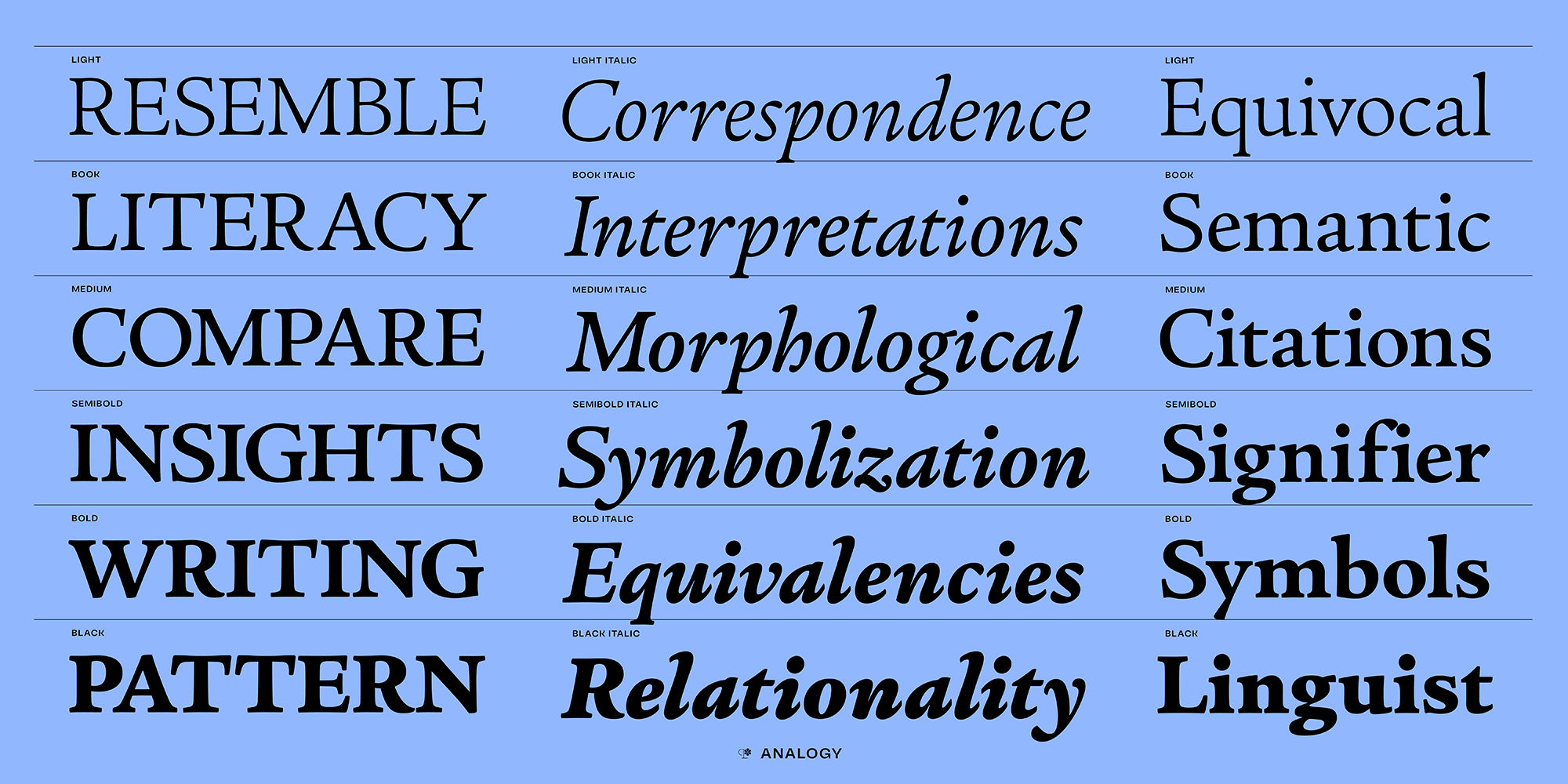
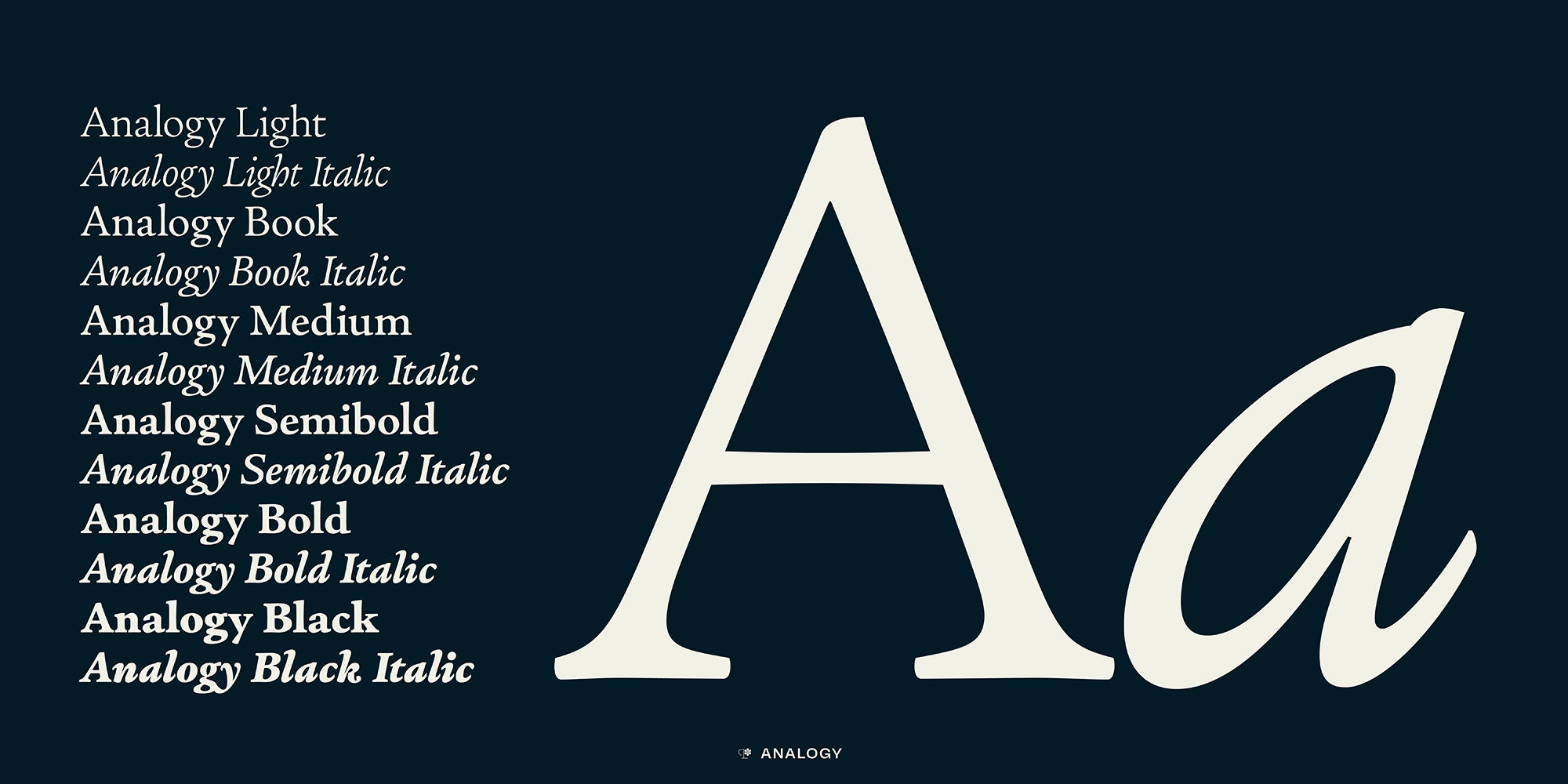
LightLight ItalicBookItalicMediumMedium ItalicSemiBoldSemiBold ItalicBoldBold ItalicBlackBlack Italic
OpenType Features
ON
fi fl ff ffi ffl
Standard Ligaturesliga
ON
Small Caps
Small Capssmcp
ON
1st 2nd 3rd 4th
Ordinalsordn
ON
-H– {H} ¿H¡
Case-Sensitive Formscase
ON
0123456789
Oldstyle Numeralsonum
analogy-poster-AnalogyPosters6-3e0d894e.jpg
analogy-poster-AnalogyPosters4-5fc3efe8.jpg
analogy-poster-AnalogyPosters-da1c2cd2.jpg
analogy-poster-AnalogyPosters2-264aa9f9.jpg
analogy-poster-AnalogyPosters3-3fd866ca.jpg
analogy-poster-AnalogyPosters7-d818eed3.jpg
analogy-poster-AnalogyPosters5-3d41e277.jpg
analogy-poster-AnalogyPosters6-3e0d894e.jpg
analogy-poster-AnalogyPosters4-5fc3efe8.jpg
analogy-poster-AnalogyPosters-da1c2cd2.jpg
analogy-poster-AnalogyPosters2-264aa9f9.jpg
analogy-poster-AnalogyPosters3-3fd866ca.jpg
analogy-poster-AnalogyPosters7-d818eed3.jpg
analogy-poster-AnalogyPosters5-3d41e277.jpg
analogy-poster-AnalogyPosters6-3e0d894e.jpg
analogy-poster-AnalogyPosters4-5fc3efe8.jpg
Specimens
Light72px
Compartmentalized
Light Italic72px
Buckminsterfullerene
Book72px
Unsympathetically
Italic72px
Interdenominational
Medium72px
Reimplementation
Medium Italic72px
Straightforwardness
SemiBold72px
Uncontroversially
SemiBold Italic72px
Comprehensiveness
Bold72px
Misapprehension
Bold Italic72px
Proletarianisation
Black72px
Superabundance
Black Italic72px
Entrepreneurship
SemiBold42px
The analogy is one of the oldest tools in a writer's hand. It draws an unlikely line between two things and asks the reader to walk it. A familiar object becomes the key to something strange, and a strange idea is suddenly given the weight of the familiar. When the comparison is well chosen, the reader feels a small bright moment of recognition, the quiet click of two distant things falling into place.
Medium38px
A good sentence does more than carry information. It controls the speed at which the reader moves through it, the places where the reader pauses for breath, the moments when emphasis falls and when it lifts. Writers learn this by reading carefully and by writing badly for a long time. Eventually the ear takes over from the rule book, and the writer begins to hear the sentence before it is set down.
Book34px
Literature is a craft learned slowly, often in solitude, against the steady evidence of one's own limitations. Every serious writer keeps a private archive of sentences they could not finish, scenes that refused to live, ideas that proved smaller than they seemed at the desk. The work continues anyway. The pages accumulate. In time the writer notices that something has shifted, not in the world, but in their own ability to see it.
Light21px
The analogy is a small machine of attention. It takes two things that the reader had not thought to place near each other and sets them quietly side by side, and in that proximity something useful happens. A complicated idea is suddenly visible against the shape of a simple one. A familiar feeling acquires a new weight by being compared to something it does not at first resemble. The reader, who a moment ago had been struggling to picture an abstraction, now sees it clearly, and the writer's argument moves forward. What makes an analogy work is not the cleverness of the connection but its accuracy. A weak analogy decorates the page; a strong one teaches. The reader trusts the comparison only when it survives scrutiny, when the structure of the source and the structure of the subject share something real. A fragile bridge between two ideas will collapse under the smallest pressure, and the reader will feel the collapse and lose faith in the writer for the next several paragraphs. A well-built bridge will carry the reader across without their noticing it was there at all. The best writers think analogically as a habit. They reach for comparisons not as ornament but as the most efficient route between an idea and the reader's grasp of it. The result is prose that feels both surprising and inevitable, the kind of writing that leaves a reader convinced they had always known the thing the writer has just shown them.
Book14px
Writing is one of the few crafts in which the apprenticeship never quite ends. A young writer begins with the conviction that the work will get easier with practice. Many years later, the same writer, now older and considerably wiser, knows that the work has only become harder, because the standards by which the writer judges their own pages have risen faster than their ability to meet them. This is the strange compensation of a long career. The skill grows, but the eye sharpens with it, and the gap between what the writer can see and what the writer can do never quite closes. This is why so much of literature is, in the end, about its own making. The novel that reflects on the difficulty of writing a novel, the poem that turns its attention back on the act of speaking, the essay that interrogates its own argument in the closing paragraphs. These are not the indulgences of self-conscious authors. They are the natural expression of a craft whose practitioners spend most of their working hours wrestling with the materials of their trade, watching language refuse to do what they want it to do, and then trying again. The reader, of course, sees none of this. The reader sees only the finished sentence, the line that arrives where it needed to arrive, the analogy that lights up the dark corner of an argument. The labor that produced the sentence is invisible by design. A writer who allows the reader to feel the strain of the writing has, in most cases, failed. The work is supposed to look easy, even when, especially when, it has been the most difficult thing in the writer's day. The apprenticeship continues all the same. It continues through the writer's first published book and their twentieth, through the praise of editors and the silence of publishers, through long stretches of productive work and through the dry seasons when nothing seems to come. What the apprenticeship teaches, slowly, is not how to make literature, but how to keep showing up at the desk on the days when the writing is going badly. The craft is finally not a matter of talent but of attendance, the patient long faith that a sentence which refuses to come today may yet be there tomorrow, waiting to be written.
Description

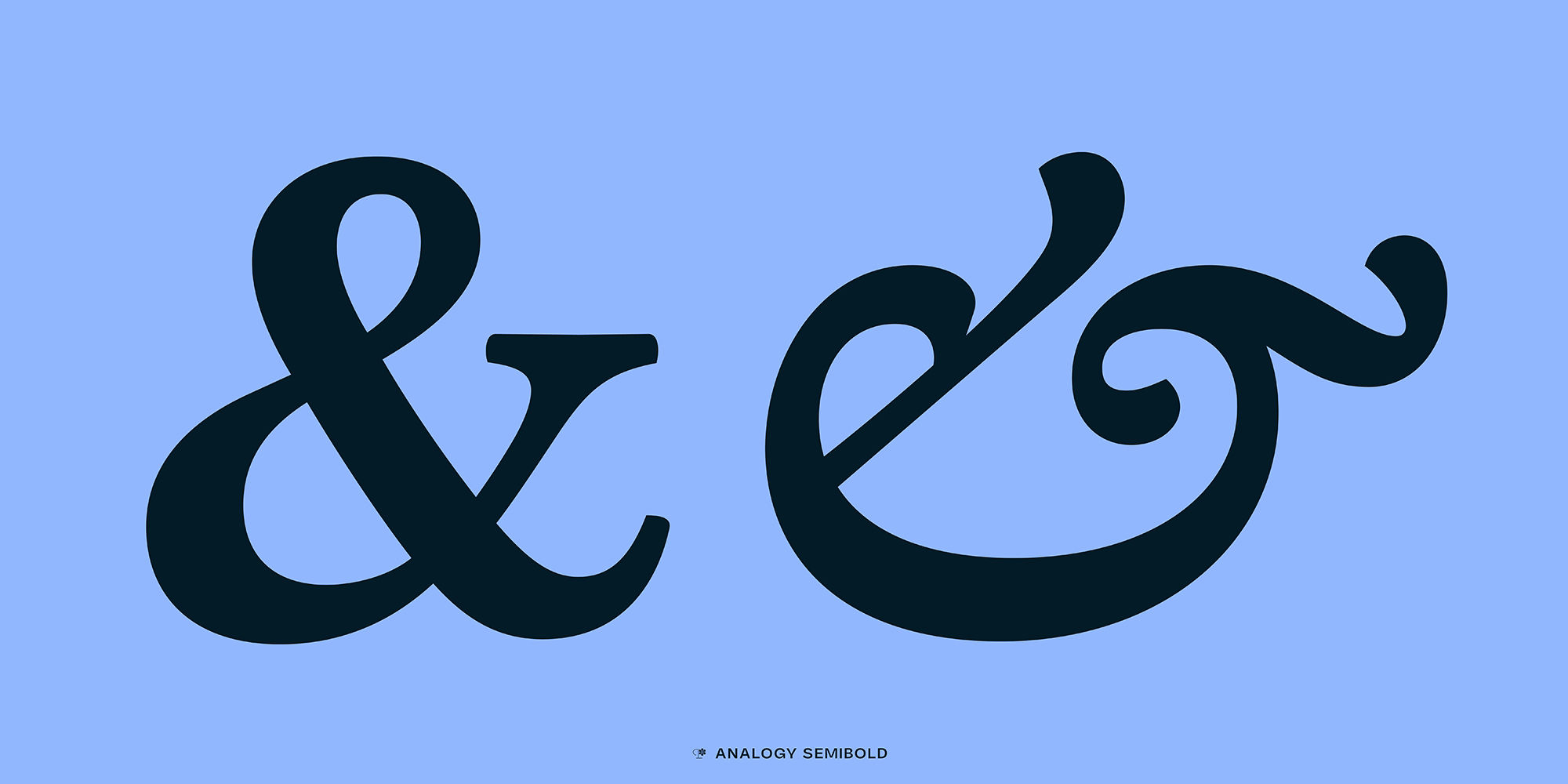
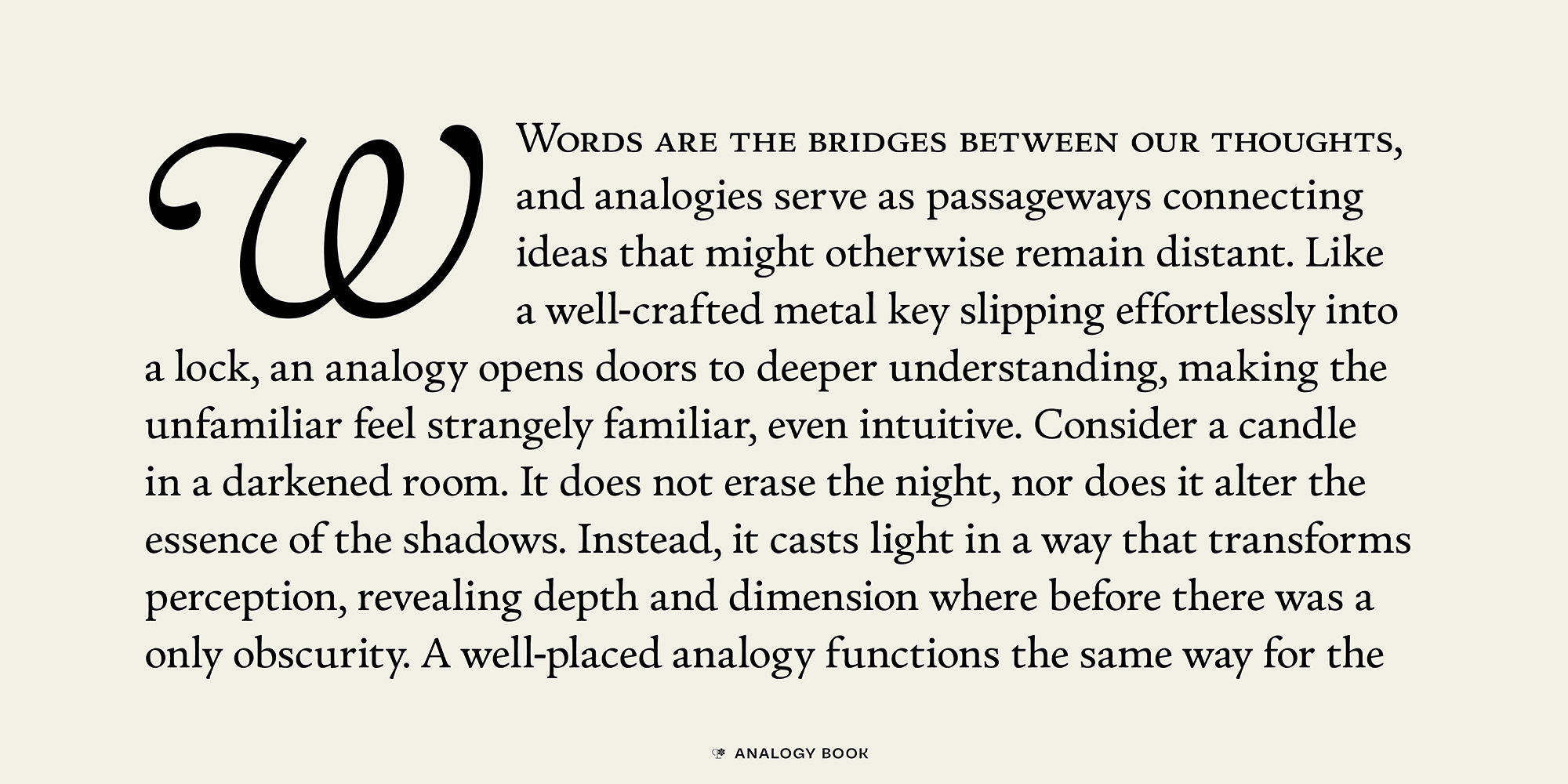
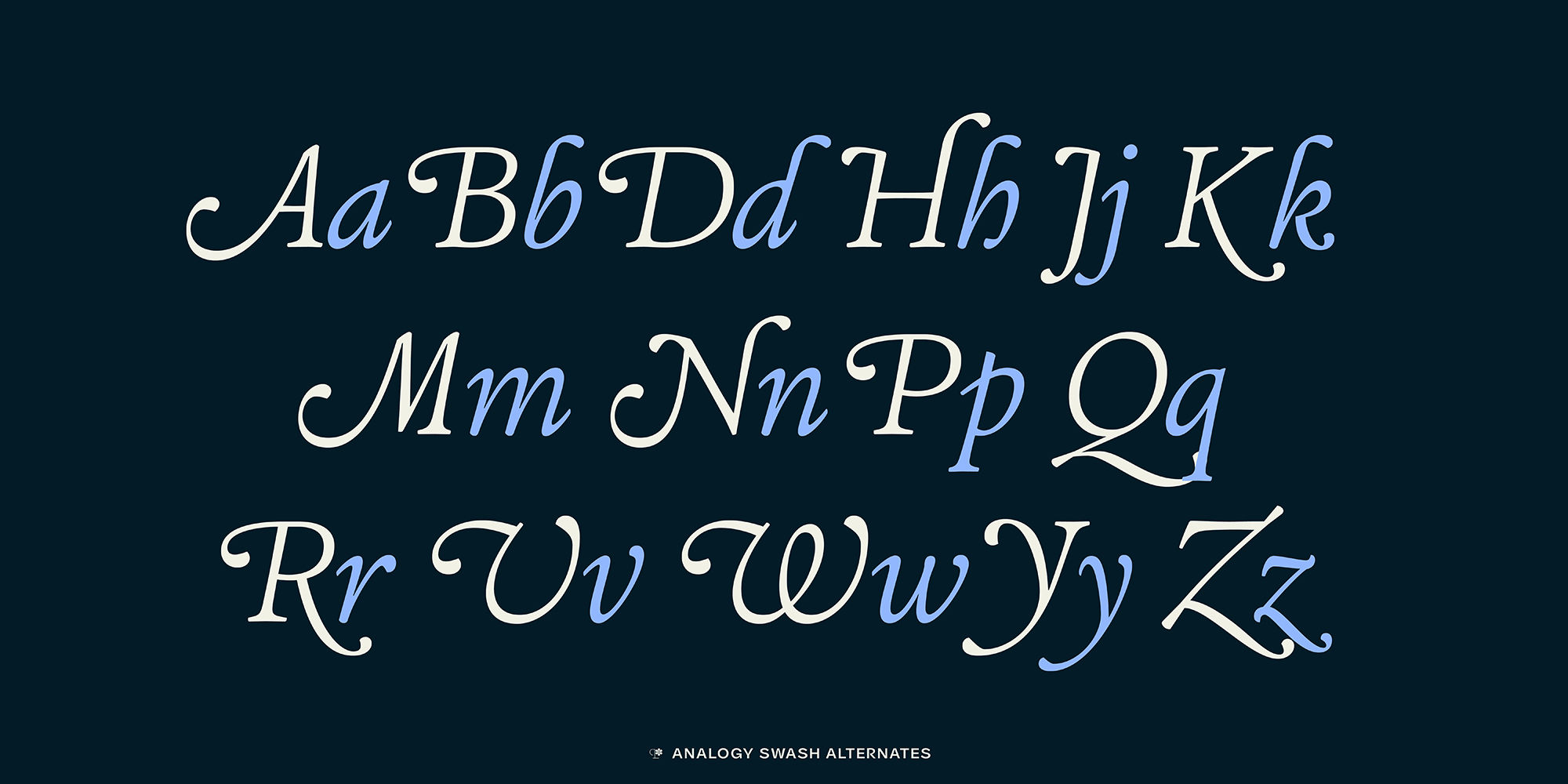
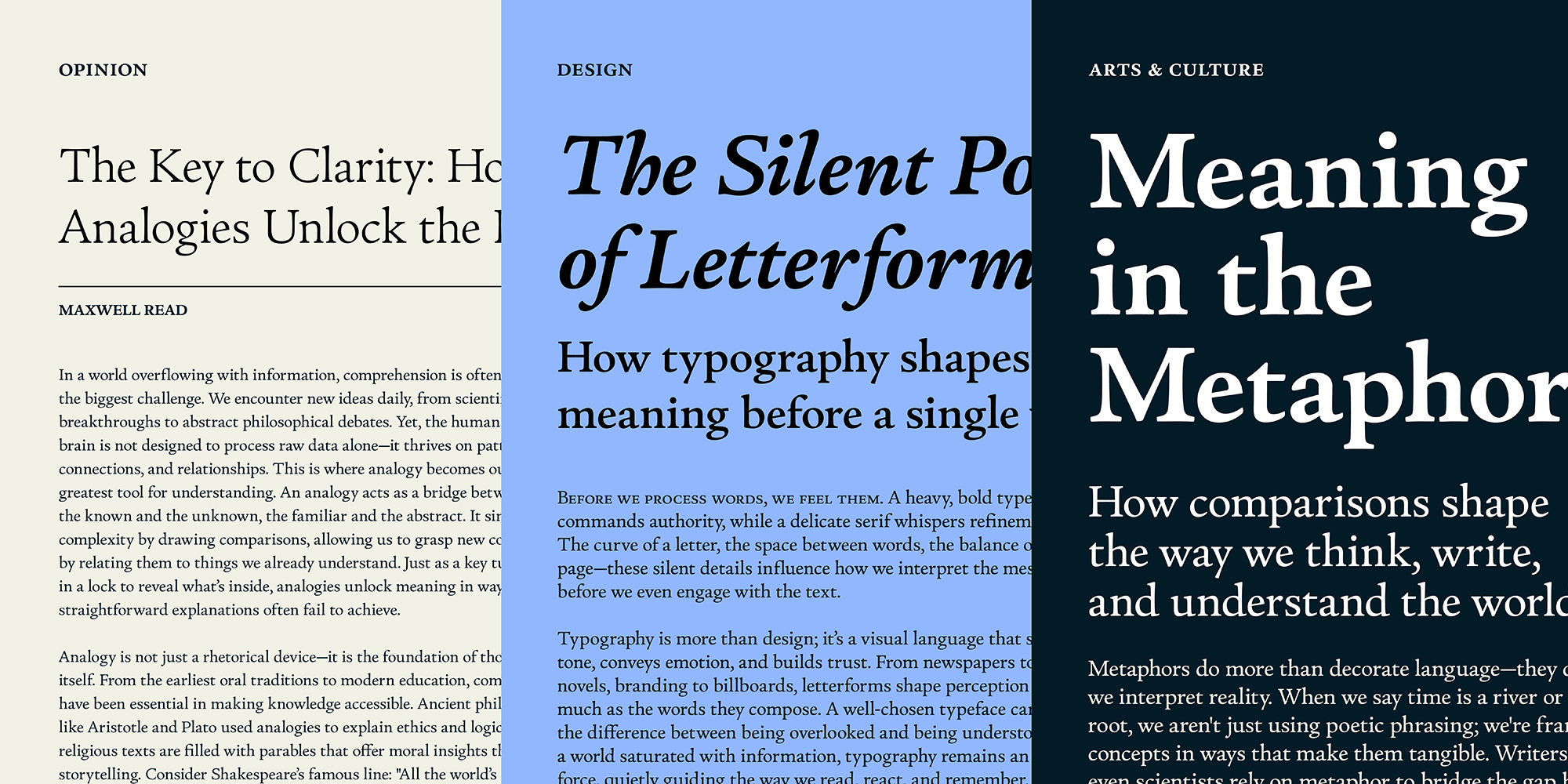
Analogy is a contemporary interpretation of the timeless elegance found in Nicolas Jenson’s 15th-century type. Rooted in the humanist forms of the 1470s yet refined for modern sensibilities, Analogy balances historical warmth with precision, offering a text typeface that is as readable as it is refined. Its calligraphic heritage shines through in the subtly flared serifs, measured contrast, and flowing rhythm, making it ideal for immersive reading experiences, editorial design, and sophisticated branding.
Supported Languages
321 Supported Languages
ACZAcheron
ACEAchinese
ACUAchuar-Shiwiar
AARAfar
AFRAfrikaans
AGRAguaruna
AINAinu
GAHAlekano
ALEAleut
ALQAlgonquin
AMCAmahuaca
AMRAmarakaeri
AMIAmis
ANWAnaang
DGLAndaandi
AUDAnuta
NJOAo Naga
APNApinayé
ARGAragonese
AAEArbëreshë Albanian
AATArvanitika Albanian
CNIAsháninka
PRQAshéninka Perené
AIIAssyrian Neo-Aramaic
ASAAsu
BANBalinese
BJNBanjar
BAKBashkir
EUSBasque
BTDBatak Dairi
BTXBatak Karo
BTMBatak Mandailing
BTSBatak Simalungun
BBCBatak Toba
BELBelarusian
BEMBemba
BEZBena
BIKBikol
BINBini
BISBislama
GAXBorana-Arsi-Guji Oromo
BOSBosnian
BREBreton
BUGBuginese
CBUCandoshi-Shapra
COTCaquinte
HNSCaribbean Hindustani
CBRCashibo-Cacataibo
CBSCashinahua
CATCatalan
CEBCebuano
AYRCentral Aymara
CKBCentral Kurdish
CBIChachi
CHAChamorro
CBKChavacano
CICChickasaw
CGGChiga
CSAChiltepec Chinantec
CJKChokwe
CHKChuukese
CIMCimbrian
CONCofán
SWCCongo Swahili
CORCornish
COSCorsican
MUSCreek
CRHCrimean Tatar
HRVCroatian
DANDanish
DHVDehu
NLDDutch
AAQEastern Abnaki
AEREastern Arrernte
HAEEastern Oromo
EFIEfik
EBUEmbu
ENGEnglish
ESEEse Ejja
EPOEsperanto
FAOFaroese
FIJFijian
FILFilipino
FINFinnish
FRAFrench
FURFriulian
GAGGagauz
GLGGalician
GANGan Chinese
CABGarifuna
DEUGerman
ALNGheg Albanian
GILGilbertese
GOMGoan Konkani
GNIGooniyandi
GCFGuadeloupean Creole French
GUZGusii
HATHaitian
HNIHani
HAWHawaiian
HILHiligaynon
WINHo-Chunk
HOPHopi
HUSHuastec
ISLIcelandic
IDOIdo
ILOIloko
INDIndonesian
IGSInterglossa
INAInterlingua
ILEInterlingue
GLEIrish
RUOIstro Romanian
ITAItalian
MZIIxcatlán Mazatec
JAMJamaican Creole English
JPNJapanese
JAVJavanese
QUCK'iche'
KEAKabuverdianu
KGPKaingang
MWPKala Lagaw Ya
KALKalaallisut
KLNKalenjin
KAMKamba
KQNKaonde
KRLKarelian
CSBKashubian
KEKKekchí
XNZKenzi
KHAKhasi
KMBKimbundu
KINKinyarwanda
KTUKituba
KONKongo
KOOKonzo
KUAKuanyama
FKVKven Finnish
KSHKölsch
LLDLadin
LADLadino
LTGLatgalian
LATLatin
LIJLigurian
LITLithuanian
LMOLombard
NDSLow German
DSBLower Sorbian
LUALuba-Lulua
SMJLule Sami
LUOLuo
LTZLuxembourgish
RUPMacedo-Romanian
VMWMakhuwa
MGHMakhuwa-Meetto
KDEMakonde
YMKMakwe
MLGMalagasy
ZLMMalay
MLTMaltese
GLVManx
SWBMaore Comorian
MRIMaori
ARNMapudungun
MCFMatsés
ULKMeriam Mir
MERMeru
OTEMezquital Otomi
XRGMinang
MINMinangkabau
MWLMirandese
MOHMohawk
CNRMontenegrin
MFEMorisyen
UMUMunsee
MWFMurrinh-Patha
WMWMwani
MIQMískito
NAGNaga Pidgin
NDONdonga
NAPNeapolitan
ZDJNgazidja Comorian
NIUNiuean
FIANobiin
NOTNomatsiguenga
MRQNorth Marquesan
NDENorth Ndebele
KMRNorthern Kurdish
HEANorthern Qiandong Miao
UZNNorthern Uzbek
OJBNorthwestern Ojibwa
NORNorwegian
NOVNovial
NYNNyankole
OCIOccitan
CHJOjitlán Chinantec
ORCOrma
ORHOroqen
OSSOssetian
PAUPalauan
PLZPaluan
PAMPampanga
TOPPapantla Totonac
PAPPapiamento
NSOPedi
PCDPicard
CPUPichis Ashéninka
PMSPiemontese
PISPijin
PIUPintupi-Luritja
PPLPipil
PONPohnpeian
POLPolish
PORPortuguese
POTPotawatomi
TSZPurepecha
PBBPáez
QUEQuechua
RARRarotongan
RONRomanian
ROHRomansh
ROORotokas
RUNRundi
RWKRwa
SAQSamburu
SMOSamoan
SAGSango
SBPSangu
SRMSaramaccan
SRDSardinian
SCOScots
GLAScottish Gaelic
SEYSecoya
SEHSena
SRPSerbian
SEISeri
CRSSeselwa Creole French
KSBShambala
SJWShawnee
SHPShipibo-Conibo
SNAShona
JIVShuar
SCNSicilian
SZLSilesian
SLKSlovak
SLVSlovenian
XOGSoga
SOMSomali
SNKSoninke
MQMSouth Marquesan
NBLSouth Ndebele
AYCSouthern Aymara
HMSSouthern Qiandong Miao
SMASouthern Sami
SOTSouthern Sotho
SPASpanish
SRNSranan Tongo
EKKStandard Estonian
LVSStandard Latvian
ZSMStandard Malay
SUNSundanese
SWHSwahili
SSWSwati
SWESwedish
GSWSwiss German
TGLTagalog
TAHTahitian
DAVTaita
CTDTedim Chin
TETTetum
TDTTetun Dili
TIVTiv
TOBToba
TOJTojolabal
TPITok Pisin
TKLTokelau
TOKToki Pona
TONTonga
TOITonga
ALSTosk Albanian
MTOTotontepec Mixe
TSOTsonga
TSNTswana
TUMTumbuka
TURTurkish
TUKTurkmen
TZHTzeltal
TZOTzotzil
AOZUab Meto
UIGUighur
UMBUmbundu
POVUpper Guinea Crioulo
HSBUpper Sorbian
VECVenetian
VEPVeps
VIEVietnamese
VOLVolapük
VROVõro
WLSWallisian
WLNWalloon
WAEWalser
WYBWangaaybuwan-Ngiyambaa
AUCWaorani
WARWaray
WBPWarlpiri
GUCWayuu
CYMWelsh
GAZWest Central Oromo
ABEWestern Abnaki
FRYWestern Frisian
WIMWik-Mungkan
WRHWiradjuri
XAVXavánte
XHOXhosa
AMEYanesha'
YAOYao
YAPYapese
YIJYindjibarndi
YUAYucateco
ZULZulu
ZROZáparo
Language support is predicted based on codepoint coverage and not guaranteed to be accurate.
Glyphs
SemiBold
U+0041 / A
Outlines
642CH
412XH
0BL
Latin Uppercase26
A
B
C
D
E
F
G
H
I
J
K
L
M
N
O
P
Q
R
S
T
U
V
W
X
Y
Z
Latin Lowercase26
a
b
c
d
e
f
g
h
i
j
k
l
m
n
o
p
q
r
s
t
u
v
w
x
y
z
Latin Uppercase Accented144
À
Á
Â
Ã
Ä
Å
Ā
Ă
Ą
Æ
Ç
Ć
Ĉ
Ċ
Č
Ď
Đ
Ð
È
É
Ê
Ë
Ē
Ė
Ę
Ě
Ə
Ĝ
Ğ
Ġ
Ģ
Ĥ
Ħ
Ì
Í
Î
Ï
Ĩ
Ī
Į
İ
IJ
Ĵ
Ķ
Ĺ
Ļ
Ľ
Ł
Ñ
Ń
Ņ
Ň
Ò
Ó
Ô
Õ
Ö
Ō
Ő
Ơ
Ø
Œ
Ŕ
Ŗ
Ř
Ś
Ŝ
Ş
Š
Ș
Ţ
Ť
Ț
Ŧ
Ù
Ú
Û
Ü
Ũ
Ū
Ŭ
Ů
Ű
Ų
Ư
Ŵ
Ý
Ŷ
Ÿ
Ź
Ż
Ž
Þ
Latin Lowercase Accented146
à
á
â
ã
ä
å
ā
ă
ą
æ
ç
ć
ĉ
ċ
č
ď
đ
ð
è
é
ê
ë
ē
ė
ę
ě
ế
ə
ĝ
ğ
ġ
ģ
ĥ
ħ
ì
í
î
ï
ĩ
ī
ĭ
į
ı
ij
ĵ
ȷ
ķ
ĺ
ļ
ľ
ł
ñ
ń
ņ
ň
ò
ó
ô
õ
ö
ō
ő
ơ
ø
œ
ŕ
ŗ
ř
ś
ŝ
ş
š
ș
ß
ţ
ť
ț
ŧ
ù
ú
û
ü
ũ
ū
ŭ
ů
ű
ų
ư
ŵ
ý
ÿ
ŷ
ź
ż
ž
þ
Numerals10
0
1
2
3
4
5
6
7
8
9
Currency8
$
¢
£
¤
¥
฿
Punctuation & Symbols65
!
"
#
%
&
'
(
)
*
+
,
-
.
/
:
;
<
=
>
?
@
[
\
]
^
_
{
|
}
~
¡
¦
§
©
ª
«
¬
®
°
±
·
º
»
¿
Mathematical Symbols21
×
÷
Geometric Shapes & Misc16
Greek Uppercase1
Ω
Greek Lowercase2
μ
π
Alternates1
Standard Ligatures5
Ordinals10
Stylistic Set 013
Swashes1
This typeface contains a total of 487 glyphs
Hi! Positype uses essential cookies to keep checkout and your session working, and, with your permission, Google Analytics to understand how the site is used. Essential cookies are always on; analytics is your choice.