Subscribe Now
Agent Sans
Designer:Neil Summerour
Initial Release:2020
Styles:22
Available Writing Systems
Available Styles
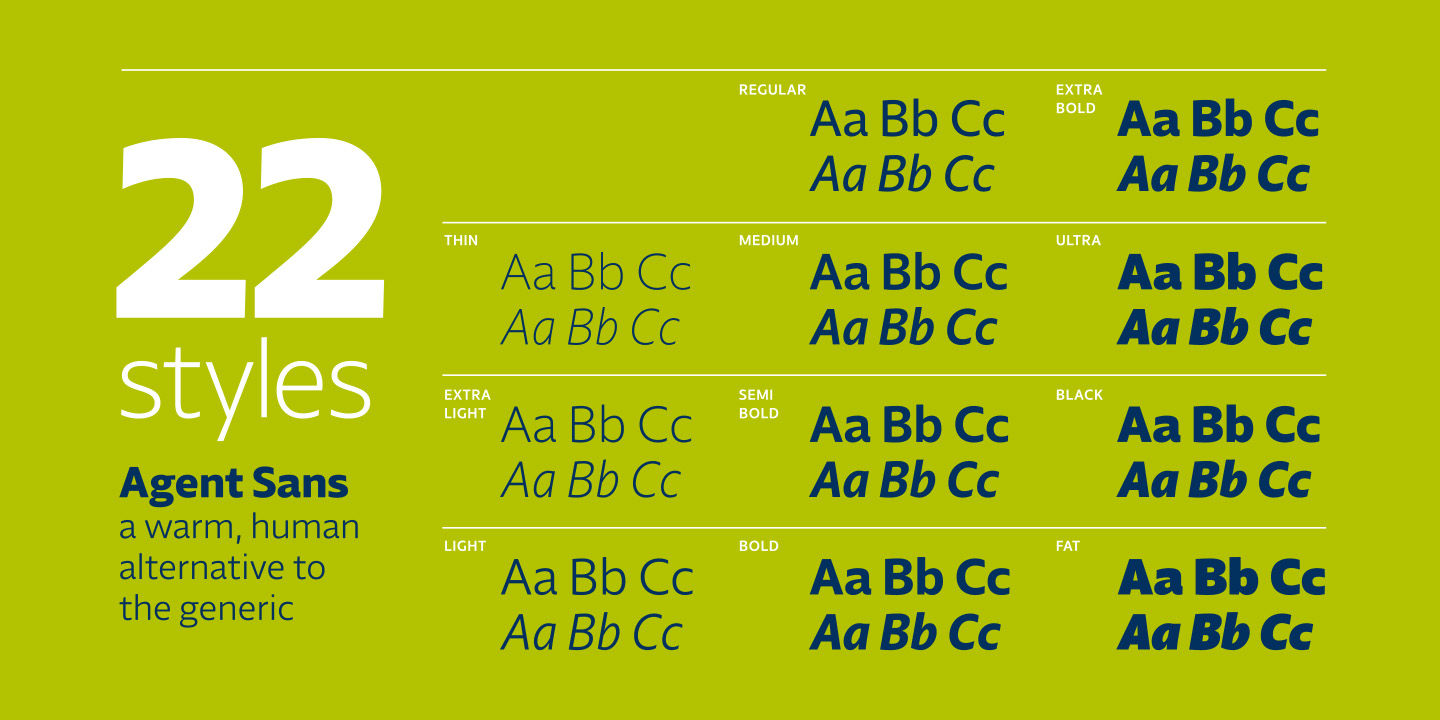
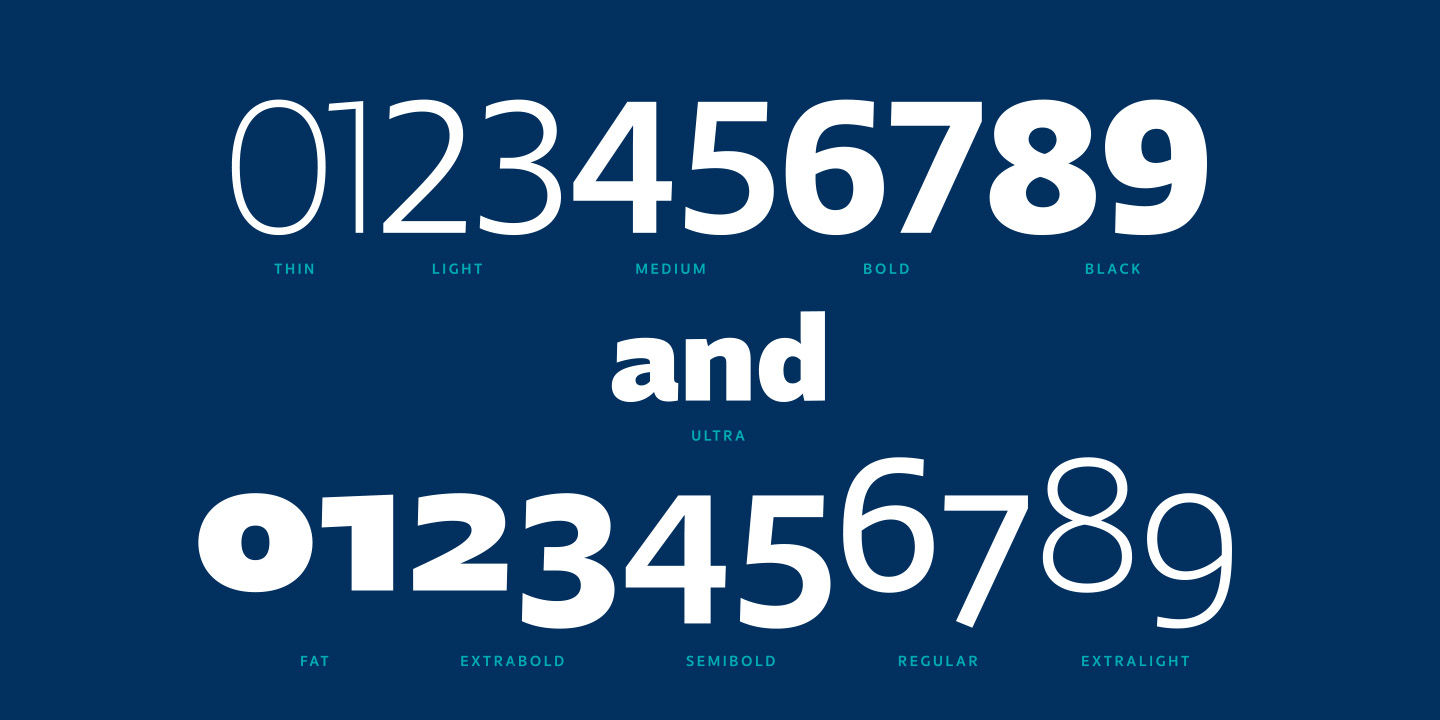
ThinThin ItalicExtraLightExtraLight ItalicLightLight ItalicRegularItalicMediumMedium ItalicSemiBoldSemiBold ItalicBoldBold ItalicExtraBoldExtraBold ItalicBlackBlack ItalicUltraUltra ItalicFatFat Italic
OpenType Features
ON
fi fl ff ffi ffl
Standard Ligaturesliga
ON
Small Caps
Small Capssmcp
ON
1/2 3/4 5/8 7/16
{frac}12345/67890{/frac}frac
ON
x12+y8=z35
Superscriptsups
ON
H2NH6CH3
Scientific Inferiorssinf
ON
1st 2nd 3rd 4th
Ordinalsordn
ON
[H] H¡ H¿ -H-
Case-Sensitive Formscase
ON
0123456789
Tabular Numeralstnum
Specimens
Thin72px
The villain laughed as the doomsday device ticked down
ExtraLight72px
Bond defused the bomb with mere seconds remaining
Light72px
Span charmed the heiress at the Monte Carlo casino
Regular72px
The bullet shattered the window of the speeding car
Medium72px
Bourne stepped from the helicopter onto the desert sand
SemiBold72px
The submarine surfaced quietly off the Cuban coast
Bold72px
Q handed Bond a watch loaded with hidden gadgets
ExtraBold72px
Alexi’s handler waited at the corner cafe in Vienna
Black72px
As always, he ordered a martini shaken & never stirred
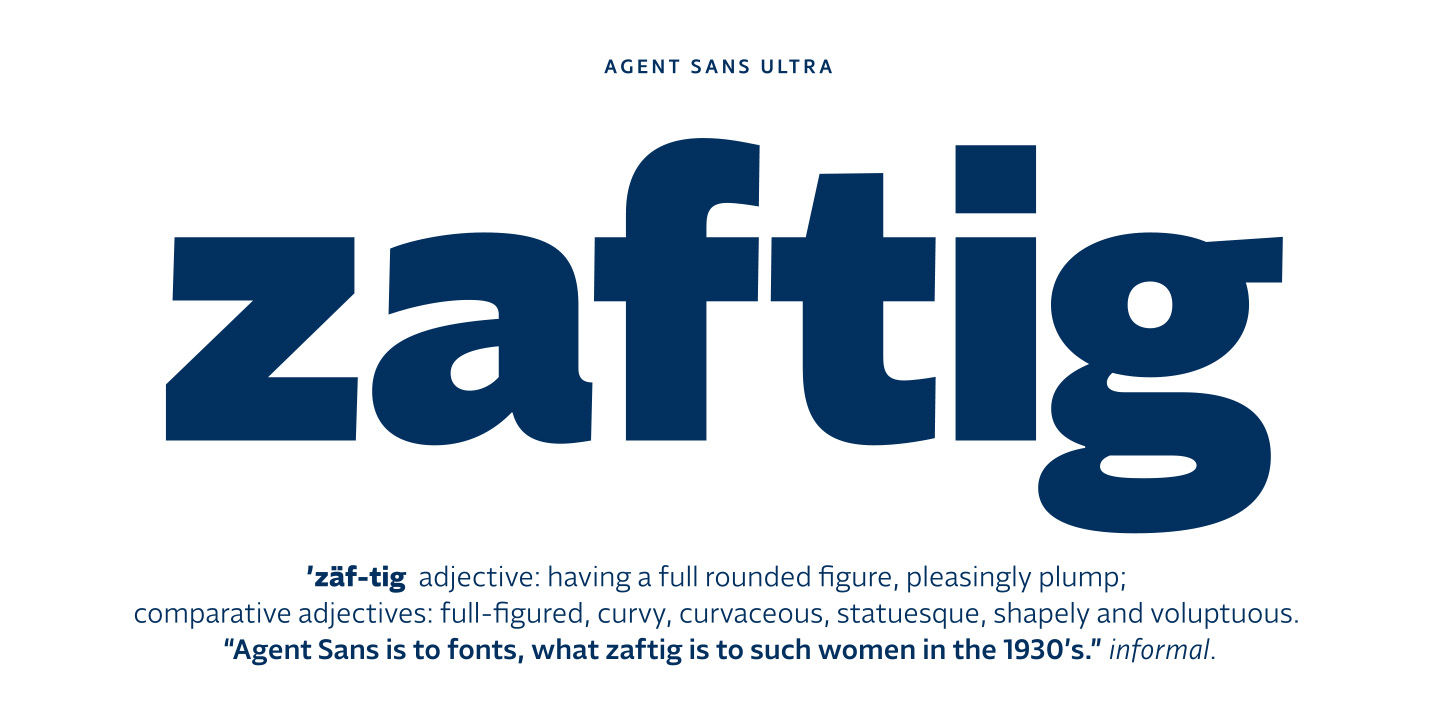
Ultra72px
Their ciphers revealed the location of a secret base
Fat72px
Bond charmed the heiress at the Monte Carlo casino
ExtraLight Italic48px
Italic42px
SemiBold Italic36px
SemiBold21px
Regular16px
Description
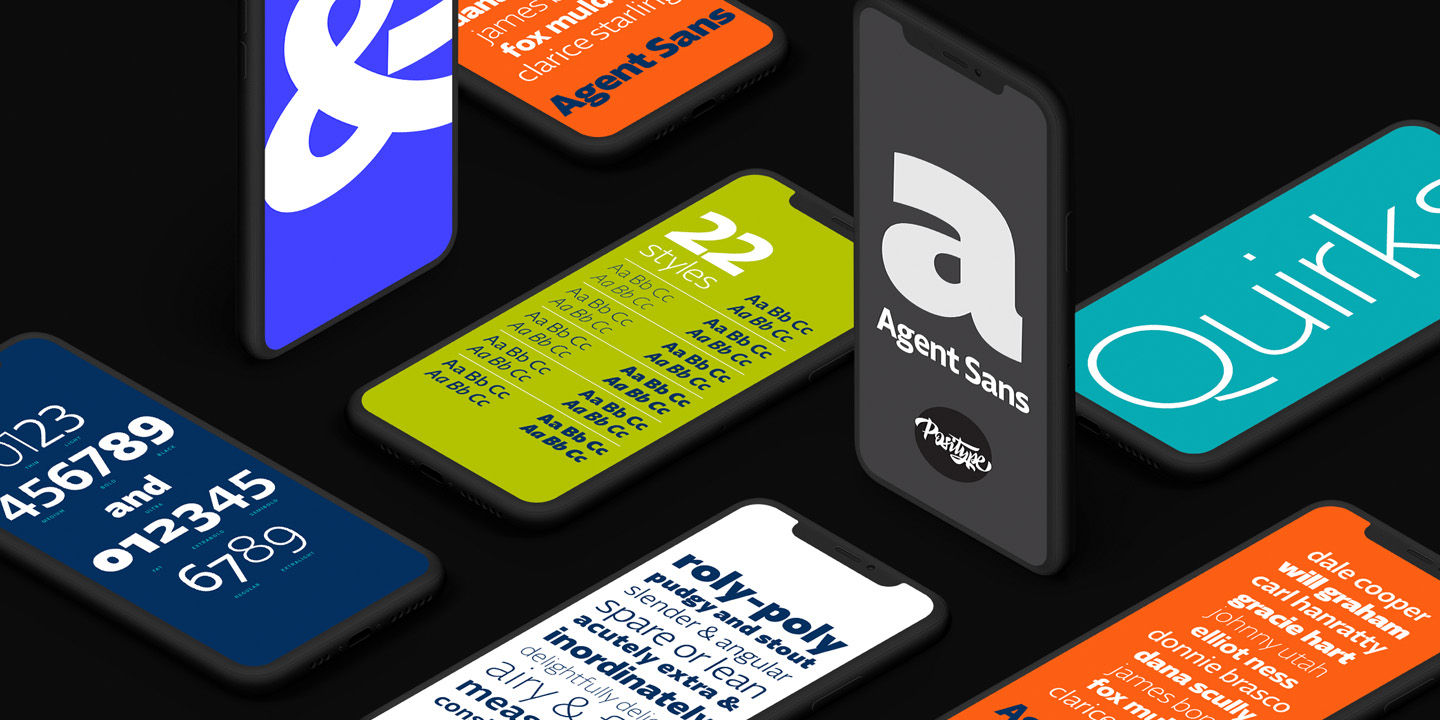
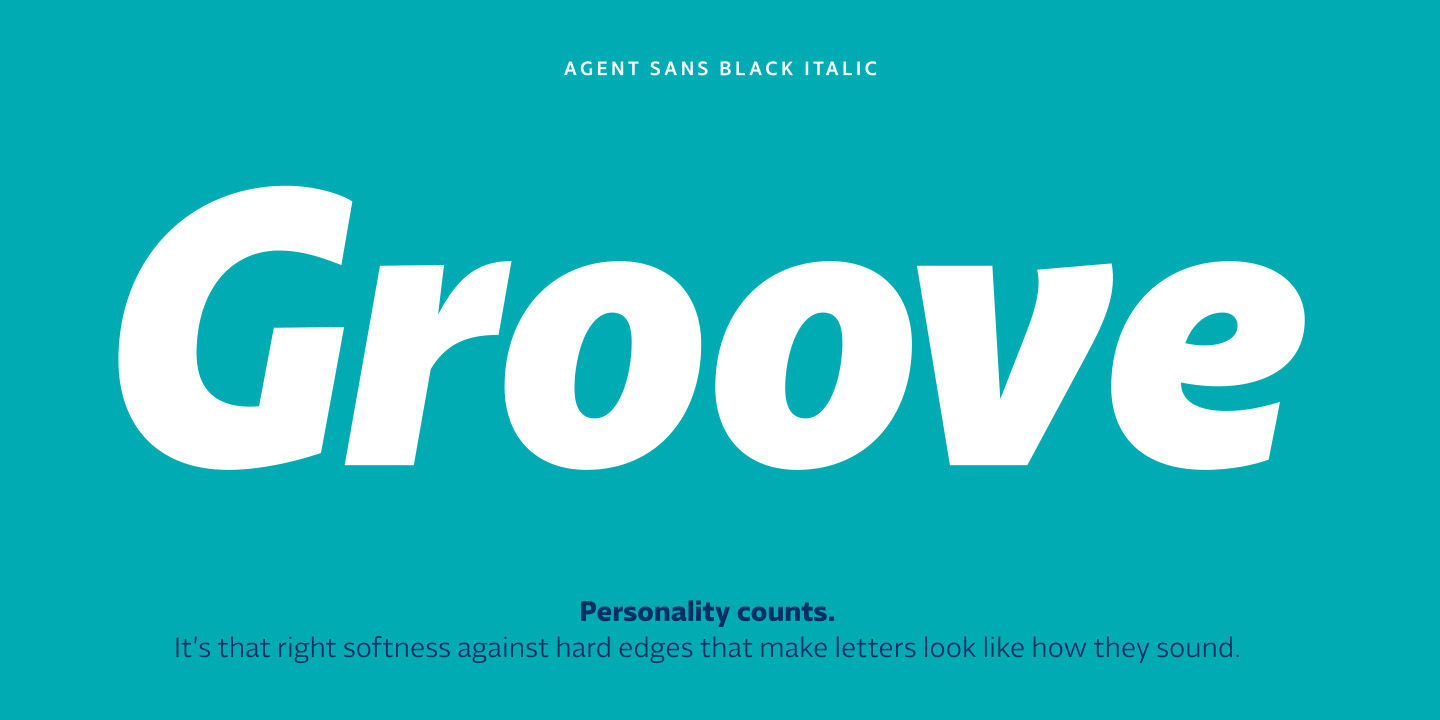
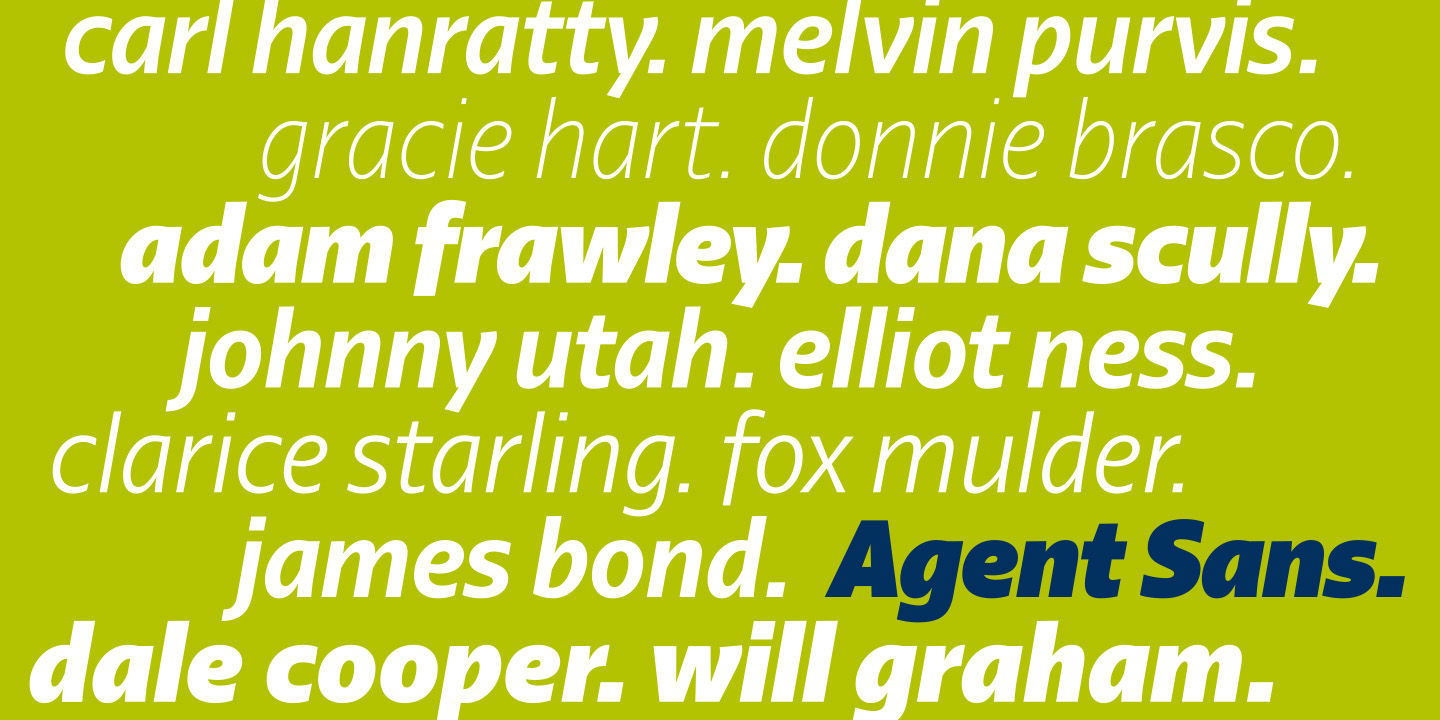
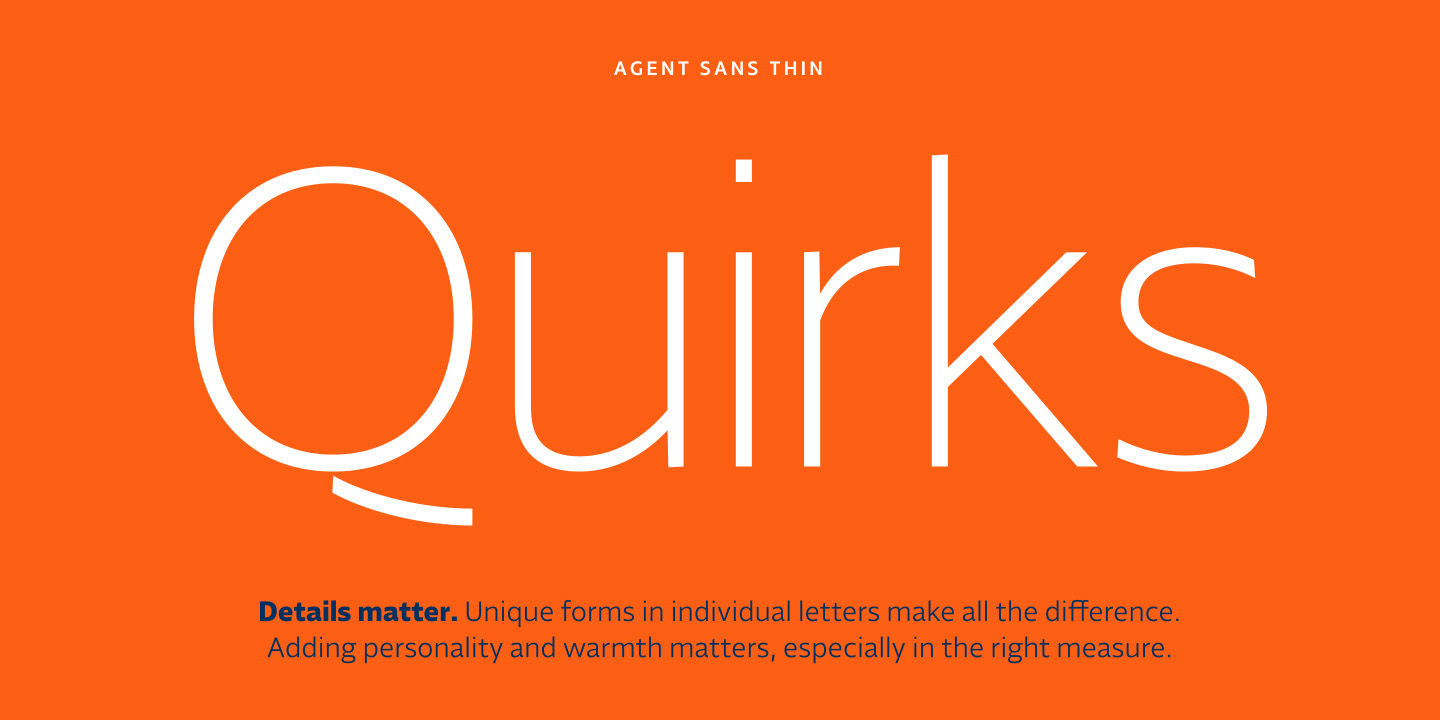
Agent Sans is an intentional departure. It ignores the cold, unemotional flavor of geometric typefaces and current trends, and instead opts for warmth, personality, movement. In order to stand out, Agent Sans is filled with everything it can—small caps, 6 numeral sets, fractions, super- and subscripts, case-sensitive glyphs, dingbats, expanded language support, and true italics drawn to complement the uprights… not just to skew alongside them.
Agent Sans is economical while maintaining its distinctive, expressive look. Perfect for branding for print and screen, and digital usage, the flexible weights available allow for pinpoint selection at whatever size. Simply put, Agent Sans is meant to be used, and used how you see fit.
Supported Languages
Glyphs
U+0041 / A
Outlines
▼Latin Uppercase26
▼Latin Lowercase26
▼Latin Uppercase Accented102
▼Latin Lowercase Accented105
▼Numerals10
▼Currency6
▼Fractions9
▼Punctuation & Symbols73
▼Mathematical Symbols22
▼Superscript & Subscript23
▼Geometric Shapes & Misc47
▼Greek Lowercase2
▼CJK Punctuation & Symbols2
▼Denominators15
▼Standard Ligatures7
▼Numerators15
▼Oldstyle Figures30
▼Ordinals30
▼Scientific Inferiors7
▼Stylistic Set 011
▼Subscript Alternates4
▼Superscript Alternates5
This typeface contains a total of 569 glyphs
Hi! Positype uses essential cookies to keep checkout and your session working, and, with your permission, Google Analytics to understand how the site is used. Essential cookies are always on; analytics is your choice.