Typefaces
Support
Legal
Learn
Positype
You
support@positype.com|Instagram|Threads|Blue Sky|Pinterest
Subscribe Now

Air Pro

Designer:Neil Summerour
Engineer:Potch Auacherdkul
Initial Release:2011
Current Release:2022
Styles:24
Collection Overview
Air Pro XCondensed
Air Pro Compressed
Air Pro Condensed
Air Pro
Air Pro Extended
Available Writing Systems
Available Styles
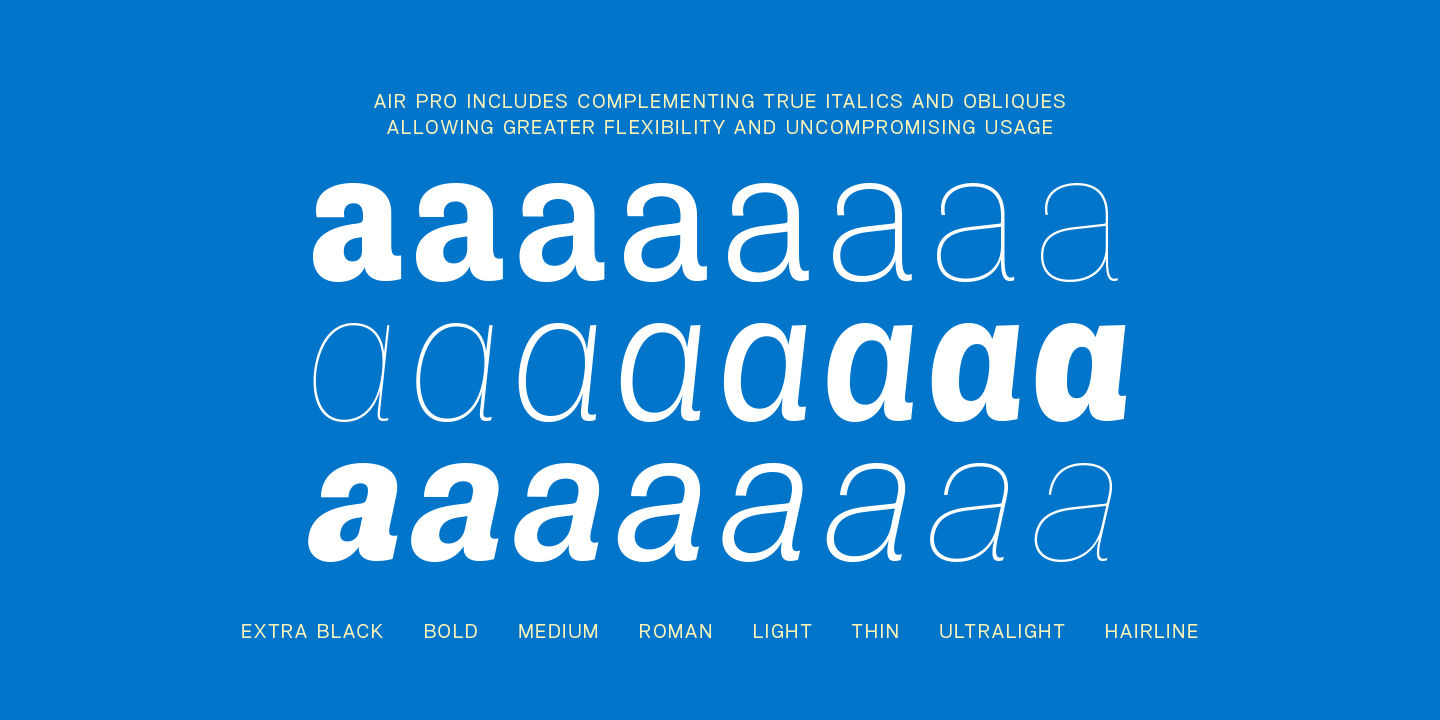
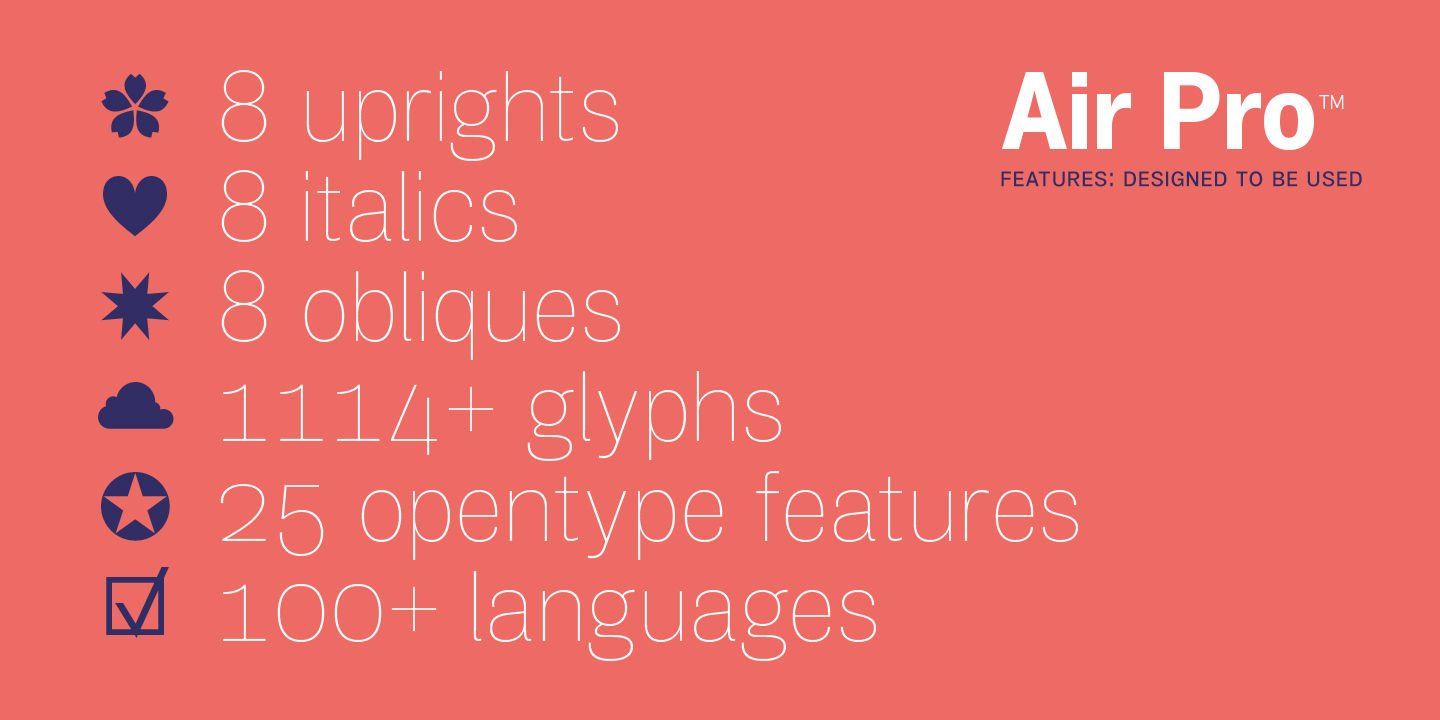
HairlineHairline ItalicHairline ObliqueUltraLightUltraLight ItalicUltraLight ObliqueThinThin ItalicThin ObliqueLightLight ItalicLight ObliqueRomanItalicObliqueMediumMedium ItalicMedium ObliqueBoldBold ItalicBold ObliqueExtraBoldExtraBold ItalicExtraBold Oblique
OpenType Features
ON
Small Caps
Small Capssmcp
ON
1/2 3/4 5/8 7/16
Fractionsfrac
ON
xn-283
Superscriptsups
ON
H₂O CO₂ H₂SO₄
Scientific Inferiorssinf
ON
2nd 46th
Ordinalsordn
ON
(H) [H] @
Case-Sensitive Formscase
ON
0123456789
Oldstyle Numeralsonum
ON
0123456789
Tabular Numeralstnum
ON
JMQfgky@
Stylistic Set 1ss01
air-pro-poster-AirPro-2x1-005-1c43e7a0.jpg
air-pro-poster-AirPro-2x1-hero-64a51a7a.jpg
air-pro-poster-AirPro-2x1-001-27325c39.jpg
air-pro-poster-AirPro-2x1-002-5b495ac0.jpg
air-pro-poster-AirPro-2x1-003-3821d99e.jpg
air-pro-poster-AirPro-2x1-004-b921630a.jpg
air-pro-poster-AirPro-2x1-007-b26ad8ce.jpg
air-pro-poster-AirPro-2x1-006-86644436.jpg
air-pro-poster-AirPro-2x1-005-1c43e7a0.jpg
air-pro-poster-AirPro-2x1-hero-64a51a7a.jpg
air-pro-poster-AirPro-2x1-001-27325c39.jpg
air-pro-poster-AirPro-2x1-002-5b495ac0.jpg
air-pro-poster-AirPro-2x1-003-3821d99e.jpg
air-pro-poster-AirPro-2x1-004-b921630a.jpg
air-pro-poster-AirPro-2x1-007-b26ad8ce.jpg
air-pro-poster-AirPro-2x1-006-86644436.jpg
air-pro-poster-AirPro-2x1-005-1c43e7a0.jpg
air-pro-poster-AirPro-2x1-hero-64a51a7a.jpg
Specimens
Hairline72px
Lightheartedness
Hairline Italic72px
Deconstructionist
Hairline Oblique72px
Understandability
Roman72px
Circumnavigated
Italic72px
Lightheadedness
Oblique72px
Transcendentally
Bold72px
Photographically
Bold Italic72px
Fundamentalists
Bold Oblique72px
Parliamentarians
Thin48px
Latitudinal circulation occurs because incident solar radiation per unit area is highest at the heat equator, and decreases as the latitude increases, reaching minima at the poles. It consists of two primary convection cells, the Hadley cell and the polar vortex
Medium48px
Thermal updrafts are rising currents of warm, less-dense air caused by uneven solar heating of the Earth’s surface, acting as convective engines in weather systems. As these warm air parcels rise, they cool, often creating cumulus clouds, thunderstorm updrafts
Thin24px
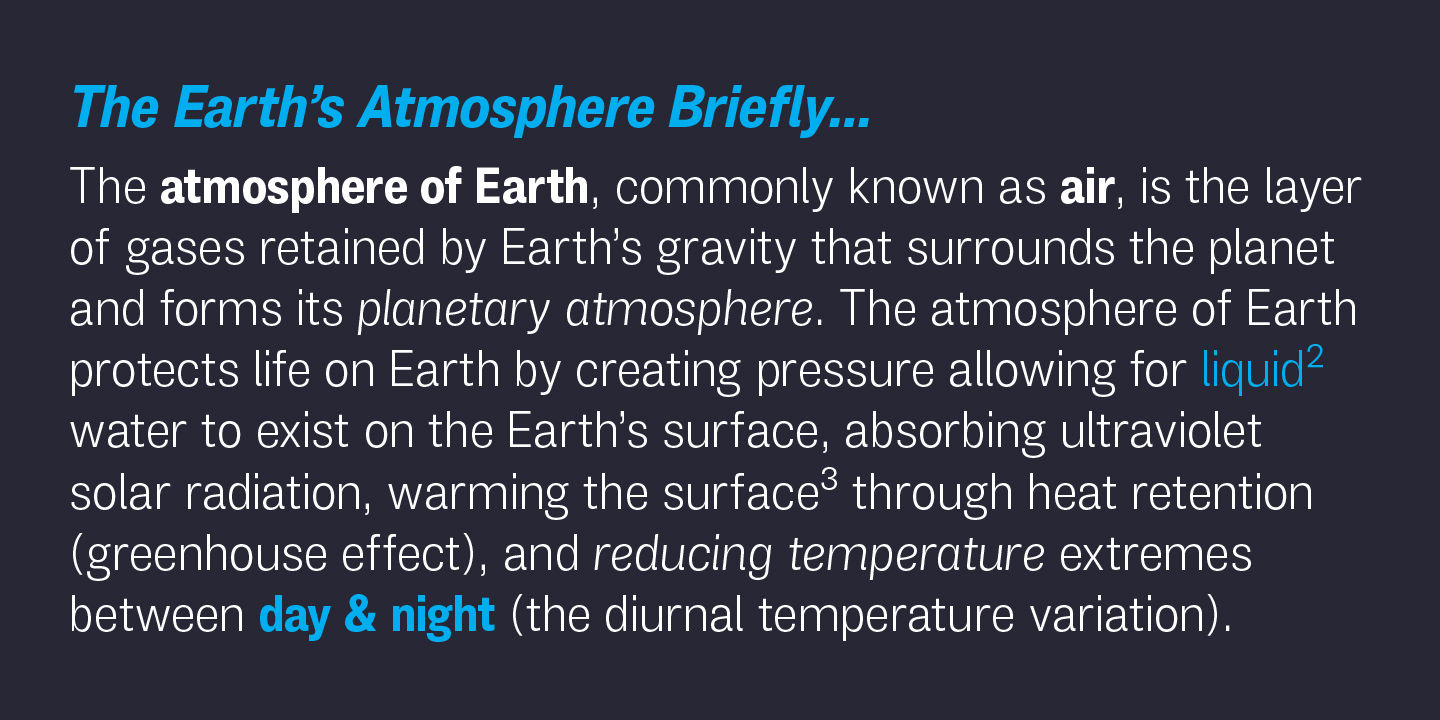
Most brief but violent disturbances in Earth’s wind systems involve large areas of ascending and descending air. Thunderstorms are no exception to this pattern. In technical terms, a thunderstorm is said to develop when the atmosphere becomes “unstable to vertical motion.” Such an instability can arise whenever relatively warm, light air is overlain by cooler, heavier air. Under such conditions the cooler air tends to sink, displacing the warmer air upward. If a sufficiently large volume of air rises, an updraft (a strong current of rising air) will be produced. If the updraft is moist, the water will condense and form clouds; condensation in turn will release latent heat energy, further fueling upward air motion and increasing the instability. Once upward air motions are initiated in an unstable atmosphere, rising parcels of warm air accelerate as they rise through their cooler surroundings because they have a lower density and are more buoyant. This motion can set up a pattern of convection wherein heat and moisture are transported upward and cooler and drier air is transported downward. Areas of the atmosphere where vertical motion is relatively strong are called cells, and when they carry air to the upper troposphere (the lowest layer of the atmosphere), they are called deep cells. Thunderstorms develop when deep cells of moist convection become organized and merge, and then produce precipitation and ultimately lightning and thunder.
Roman16px
Most brief but violent disturbances in Earth’s wind systems involve large areas of ascending and descending air. Thunderstorms are no exception to this pattern. In technical terms, a thunderstorm is said to develop when the atmosphere becomes “unstable to vertical motion.” Such an instability can arise whenever relatively warm, light air is overlain by cooler, heavier air. Under such conditions the cooler air tends to sink, displacing the warmer air upward. If a sufficiently large volume of air rises, an updraft (a strong current of rising air) will be produced. If the updraft is moist, the water will condense and form clouds; condensation in turn will release latent heat energy, further fueling upward air motion and increasing the instability. Once upward air motions are initiated in an unstable atmosphere, rising parcels of warm air accelerate as they rise through their cooler surroundings because they have a lower density and are more buoyant. This motion can set up a pattern of convection wherein heat and moisture are transported upward and cooler and drier air is transported downward. Areas of the atmosphere where vertical motion is relatively strong are called cells, and when they carry air to the upper troposphere (the lowest layer of the atmosphere), they are called deep cells. Thunderstorms develop when deep cells of moist convection become organized and merge, and then produce precipitation and ultimately lightning and thunder. Upward motions can be initiated in a variety of ways in the atmosphere. A common mechanism is by the heating of a land surface and the adjacent layers of air by sunlight. If surface heating is sufficient, the temperatures of the lowest layers of air will rise faster than those of layers aloft, and the air will become unstable. The ability of the ground to heat up quickly is why most thunderstorms form over land rather than oceans . Instability can also occur when layers of cool air are warmed from below after they move over a warm ocean surface or over layers of warm air. Mountains, too, can trigger upward atmospheric motion by acting as topographic barriers that force winds to rise. Mountains also act as high-level sources of heat and instability when their surfaces are heated by the Sun.
Description
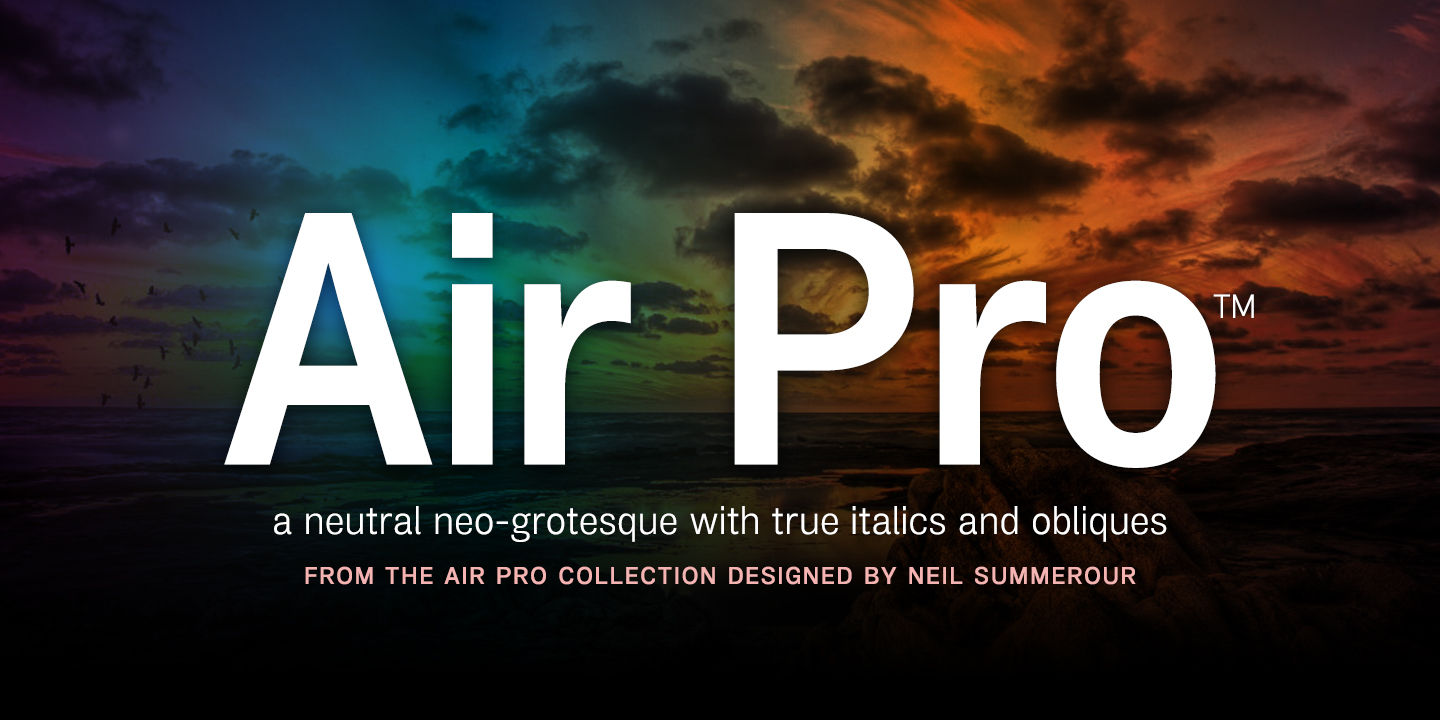
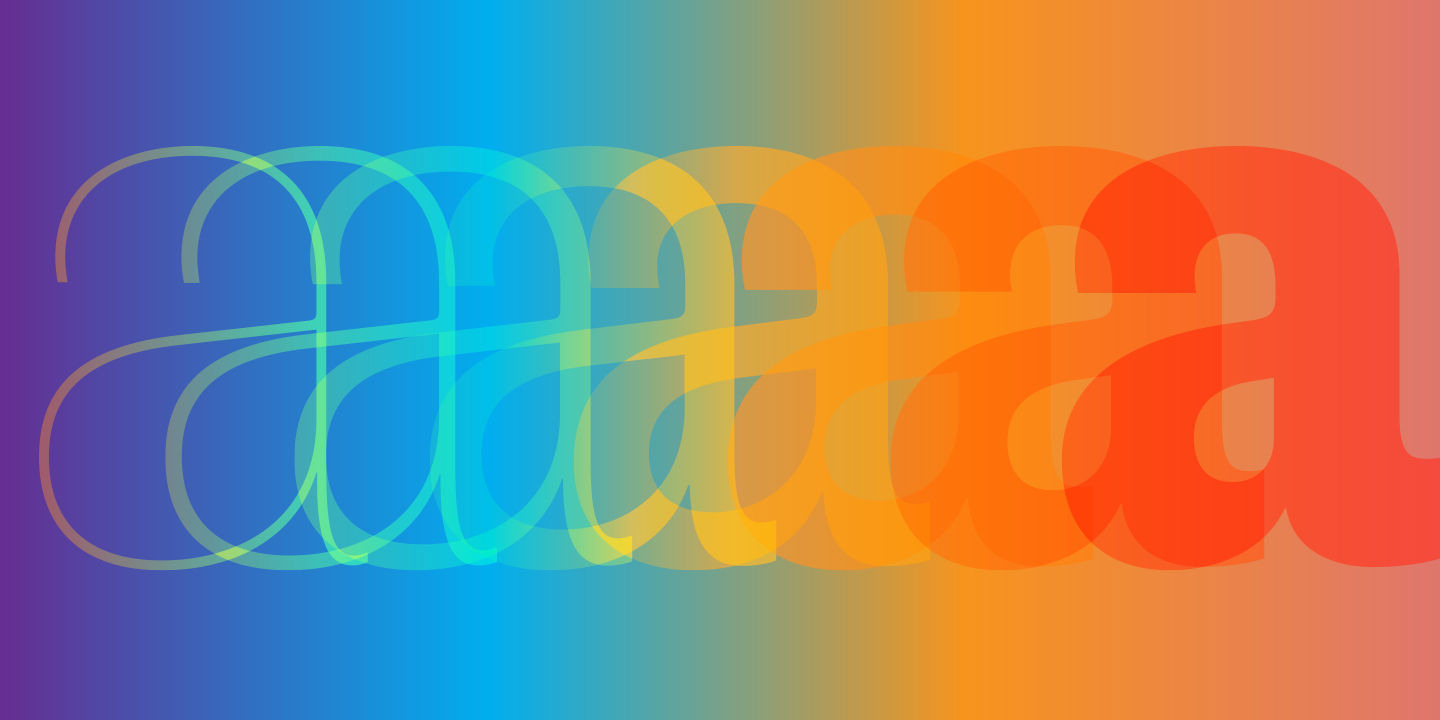
Air Pro is a neutral, highly legible neo-grotesque that includes both true italics and obliques. This typeface is refinement and expansion of Air, originally designed in 2011 by Neil Summerour. Heavily influenced by Summerour’s Aaux Next typeface and Akzidenz-Grotesk, the typeface features a very efficient footprint, logical weight options, small caps, expanded numeral sets, extensive language support, and 5 total widths. The new Air Pro Collection focuses on flexibility, accessibility, and usability rather than hinging the design on distracting design traits that could diminish legibility or become dated over time. Besides, even with grotesques, we all need a little fresh air from time to time.
Supported Languages
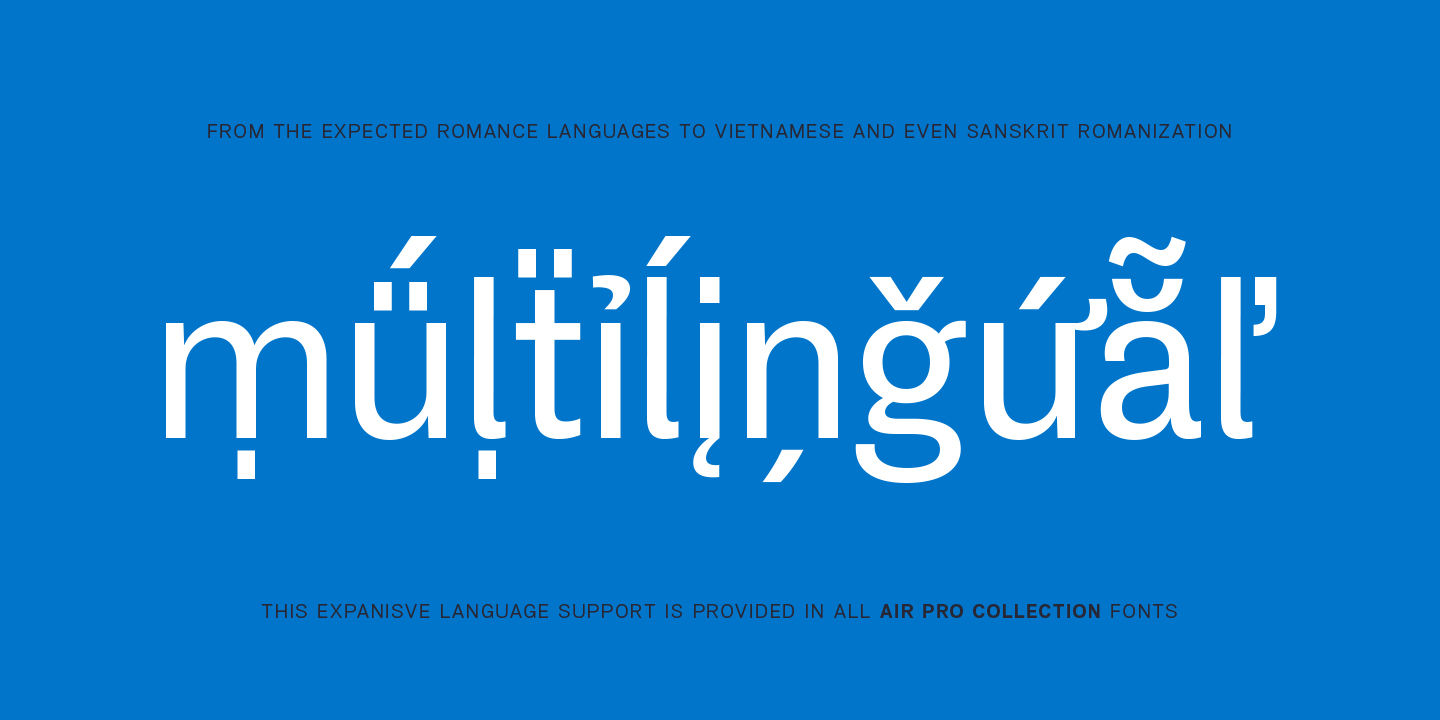
359 Supported Languages
ACZAcheron
ACEAchinese
ACHAcholi
ACUAchuar-Shiwiar
AARAfar
AFRAfrikaans
AGRAguaruna
AHTAhtna
AINAinu
GAHAlekano
ALEAleut
ALQAlgonquin
AMCAmahuaca
AMRAmarakaeri
AMIAmis
ANWAnaang
DGLAndaandi
AUDAnuta
NJOAo Naga
APNApinayé
ARGAragonese
AAEArbëreshë Albanian
AATArvanitika Albanian
CNIAsháninka
PRQAshéninka Perené
AIIAssyrian Neo-Aramaic
ASTAsturian
ASAAsu
TAYAtayal
AWEAwetí
BANBalinese
BJNBanjar
BFABari
BAKBashkir
EUSBasque
BTDBatak Dairi
BTXBatak Karo
BTMBatak Mandailing
BTSBatak Simalungun
BBCBatak Toba
BELBelarusian
BEMBemba
BEZBena
BIKBikol
BINBini
BISBislama
GAXBorana-Arsi-Guji Oromo
BOSBosnian
BREBreton
BUGBuginese
CBUCandoshi-Shapra
COTCaquinte
HNSCaribbean Hindustani
CBRCashibo-Cacataibo
CBSCashinahua
CATCatalan
CEBCebuano
AYRCentral Aymara
CKBCentral Kurdish
NHNCentral Nahuatl
CBIChachi
CHAChamorro
CBKChavacano
CICChickasaw
CGGChiga
CSAChiltepec Chinantec
CJKChokwe
CHKChuukese
CIMCimbrian
CONCofán
SWCCongo Swahili
CORCornish
COSCorsican
MUSCreek
CRHCrimean Tatar
HRVCroatian
DANDanish
DHVDehu
DIQDimli
NLDDutch
AAQEastern Abnaki
AEREastern Arrernte
HAEEastern Oromo
EFIEfik
EBUEmbu
ENGEnglish
ESEEse Ejja
EPOEsperanto
CFMFalam Chin
FAOFaroese
FIJFijian
FILFilipino
FINFinnish
FRAFrench
FURFriulian
GQAGa'anda
GAGGagauz
GLGGalician
GANGan Chinese
LUGGanda
CABGarifuna
DEUGerman
ALNGheg Albanian
GILGilbertese
GOMGoan Konkani
GNIGooniyandi
GUXGourmanchéma
GCFGuadeloupean Creole French
GUZGusii
HATHaitian
CNHHakha Chin
HAAHan
HNIHani
HILHiligaynon
WINHo-Chunk
HOPHopi
HUSHuastec
ISLIcelandic
IDOIdo
IBOIgbo
ILOIloko
SMNInari Sami
INDIndonesian
IGSInterglossa
INAInterlingua
ILEInterlingue
GLEIrish
RUOIstro Romanian
ITAItalian
MZIIxcatlán Mazatec
JAMJamaican Creole English
JPNJapanese
JAVJavanese
DYOJola-Fonyi
QUCK'iche'
KEAKabuverdianu
KGPKaingang
MWPKala Lagaw Ya
KALKalaallisut
KLNKalenjin
KAMKamba
KQNKaonde
CAKKaqchikel
KRLKarelian
CSBKashubian
KEKKekchí
XNZKenzi
KHAKhasi
KIKKikuyu
KMBKimbundu
KINKinyarwanda
KIUKirmanjki
KTUKituba
KONKongo
KOOKonzo
KUAKuanyama
FKVKven Finnish
KSHKölsch
LLDLadin
LADLadino
LTGLatgalian
LATLatin
LIJLigurian
LITLithuanian
LMOLombard
NDSLow German
DSBLower Sorbian
LOZLozi
LUALuba-Lulua
SMJLule Sami
LUOLuo
LUSLushai
LTZLuxembourgish
RUPMacedo-Romanian
MADMadurese
VMWMakhuwa
MGHMakhuwa-Meetto
KDEMakonde
YMKMakwe
MLGMalagasy
ZLMMalay
MLTMaltese
MNKMandinka
MFVMandjak
KNFMankanya
GLVManx
SWBMaore Comorian
MRIMaori
ARNMapudungun
MCFMatsés
ULKMeriam Mir
MERMeru
OTEMezquital Otomi
XRGMinang
MINMinangkabau
MWLMirandese
MOHMohawk
CNRMontenegrin
MFEMorisyen
UMUMunsee
MWFMurrinh-Patha
TTTMuslim Tat
WMWMwani
MIQMískito
NAGNaga Pidgin
NDONdonga
NAPNeapolitan
ZDJNgazidja Comorian
NIUNiuean
FIANobiin
NOTNomatsiguenga
AZJNorth Azerbaijani
NDENorth Ndebele
KMRNorthern Kurdish
HEANorthern Qiandong Miao
SMENorthern Sami
UZNNorthern Uzbek
OJBNorthwestern Ojibwa
NORNorwegian
NOVNovial
NYANyanja
NYNNyankole
OCIOccitan
CHJOjitlán Chinantec
ORCOrma
ORHOroqen
OSSOssetian
LOTOtuho
PAUPalauan
PLZPaluan
PAMPampanga
TOPPapantla Totonac
PAPPapiamento
NSOPedi
PCDPicard
CPUPichis Ashéninka
PMSPiemontese
PISPijin
PIUPintupi-Luritja
PPLPipil
SJEPite Sami
PONPohnpeian
POLPolish
PORPortuguese
POTPotawatomi
TSZPurepecha
PBBPáez
QUEQuechua
RARRarotongan
RONRomanian
ROHRomansh
ROORotokas
RUNRundi
RWKRwa
SAQSamburu
SMOSamoan
SAGSango
SBPSangu
SRMSaramaccan
SRDSardinian
SCOScots
GLAScottish Gaelic
SEYSecoya
SEHSena
SRPSerbian
SEISeri
CRSSeselwa Creole French
KSBShambala
SJWShawnee
SHPShipibo-Conibo
SNAShona
JIVShuar
SCNSicilian
SZLSilesian
SLKSlovak
SLVSlovenian
XOGSoga
SOMSomali
SNKSoninke
AZBSouth Azerbaijani
NBLSouth Ndebele
AYCSouthern Aymara
HMSSouthern Qiandong Miao
SMASouthern Sami
SOTSouthern Sotho
SPASpanish
SRNSranan Tongo
EKKStandard Estonian
LVSStandard Latvian
ZSMStandard Malay
SUNSundanese
SWHSwahili
SSWSwati
SWESwedish
GSWSwiss German
TGLTagalog
TAHTahitian
DAVTaita
TLYTalysh
CTDTedim Chin
TEOTeso
TETTetum
TDTTetun Dili
TIVTiv
TLITlingit
TOBToba
TOJTojolabal
TPITok Pisin
TKLTokelau
TOKToki Pona
TONTonga
TOITonga
ALSTosk Albanian
MTOTotontepec Mixe
TKRTsakhur
TSOTsonga
TSNTswana
TUMTumbuka
TURTurkish
TUKTurkmen
TVLTuvalu
TZHTzeltal
TZOTzotzil
AOZUab Meto
UIGUighur
UMBUmbundu
SJUUme Sami
POVUpper Guinea Crioulo
HSBUpper Sorbian
VECVenetian
VEPVeps
VIEVietnamese
VOLVolapük
VROVõro
WLNWalloon
WAEWalser
WYBWangaaybuwan-Ngiyambaa
AUCWaorani
WARWaray
WBPWarlpiri
GUCWayuu
CYMWelsh
GAZWest Central Oromo
ABEWestern Abnaki
FRYWestern Frisian
WIMWik-Mungkan
WRHWiradjuri
WOLWolof
XAVXavánte
XHOXhosa
AMEYanesha'
YAOYao
YAPYapese
YIJYindjibarndi
YORYoruba
YUAYucateco
ZULZulu
ZUNZuni
ZROZáparo
Language support is predicted based on codepoint coverage and not guaranteed to be accurate.
Glyphs
Loading glyph data...
Hi! Positype uses essential cookies to keep checkout and your session working, and, with your permission, Google Analytics to understand how the site is used. Essential cookies are always on; analytics is your choice.